THE NETTL PULSE 2026
UK SME
Marketing Snapshot
approx 10 minute read

approx 10 minute read
INTRODUCTION
Marketing advice is everywhere.
Scroll through LinkedIn and you’ll see someone insisting that paid ads are the answer. Open YouTube and someone else will tell you that organic content is the secret. And somewhere in the middle someone is trying to convince you that AI will solve everything.
For small businesses, marketing has never been more complicated.
New platforms appear every year. Algorithms change constantly. And advice about “what works” often feels contradictory.
But what’s actually happening inside real small businesses?
To find out, we asked UK SMEs directly.
In the Nettl Business Marketing Survey 2026, more than 200 businesses across sectors such as retail, hospitality, professional services, and the trades, shared how they approach marketing today.
We asked about the channels they use, what brings the best results, where they struggle, and what they want to improve in the year ahead.
The responses reveal something interesting.
Most businesses already know what they should be doing. The challenge is having the time and consistency to actually do it well.
This report highlights the key findings and what they mean for businesses looking to attract more customers in 2026.
METHODOLOGY
The Nettl Business Marketing Survey 2026 gathered responses from 223 UK businesses across a range of industries.
Respondents included businesses at different stages of growth, from micro businesses to organisations with turnover above £1m.
Participants answered questions covering:
Responses were collected anonymously.
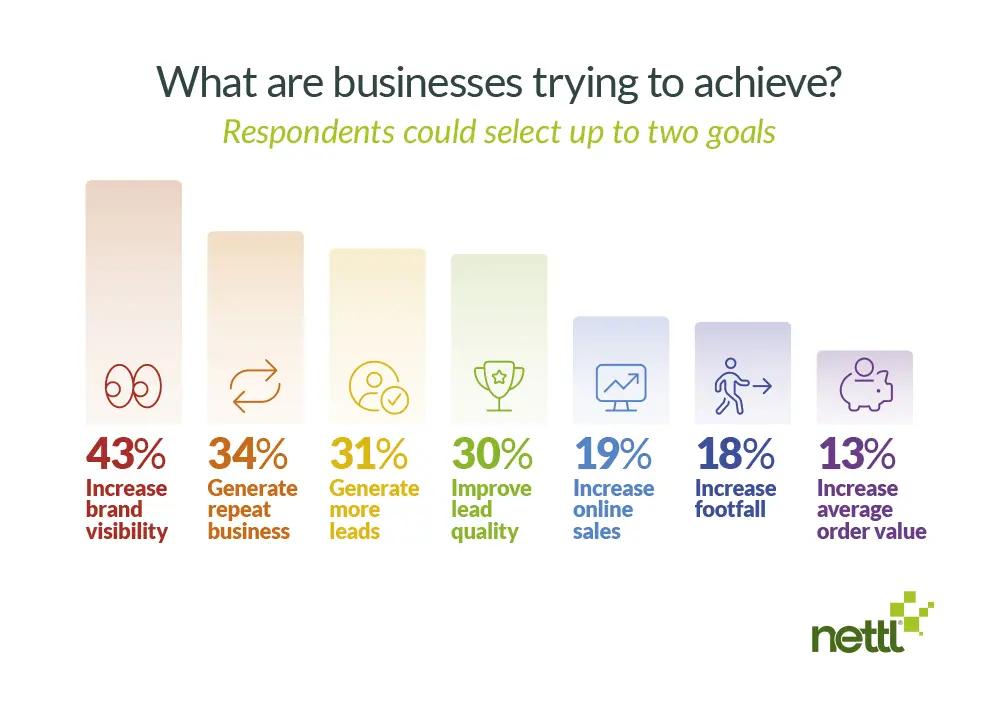
SMEs WANT VISIBILITY.
TIME GETS IN THE WAY.
When asked about their priorities for 2026, the most common goal was increasing brand visibility (42.6%), followed by generating repeat business (34.3%).
This tells us something important.
Many small businesses aren’t chasing more channels or complicated strategies. Instead, they’re trying to stay visible so customers remember them when the time comes to buy.
But there’s a problem.
The most common barrier to marketing success isn’t budget or knowledge.
It’s time.
Over a quarter of businesses say a lack of time is their biggest marketing challenge. That creates a familiar situation: businesses know marketing matters, but struggle to keep it consistent.

Actionable Insight
For most SMEs, the answer isn’t “more marketing.” It is “more sustainable marketing.” Businesses must move away from labour-intensive, manual processes and toward systems that allow for consistent visibility without requiring a 40-hour work week to manage.
THE WEBSITE STILL WINS
Despite the rise of social media platforms, one result stands out clearly.
The website.
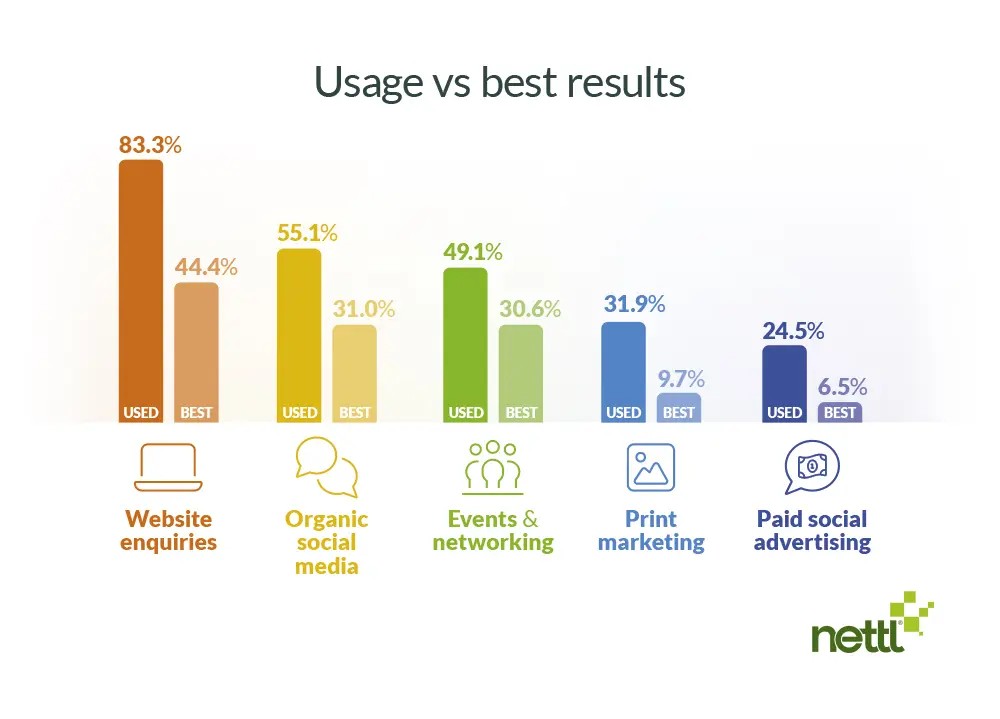
More than 83% of businesses use a website, and 44% say it delivers their best results.
At first glance, that might seem surprising.
But when businesses talk about their website delivering results, they’re usually referring to where enquiries or sales happen, not necessarily how customers found them.
In reality, most marketing activity – whether it’s search, social, email, or referrals – ultimately leads back to the website.
That’s where interest turns into enquiries, bookings, or purchases.
That makes the website less of a “channel” in its own right, and more of a conversion hub for everything else.
Often, small improvements to enquiry forms, landing pages, or calls to action can dramatically improve results.
Actionable Insight
Before investing in more marketing channels, make sure your website is ready to convert. Improving conversion rates can produce better results than simply driving more traffic. Often we see companies increase ad spend without first optimising the landing page.
SOME CHANNELS LOOK BUSY BUT
DON’T DELIVER ENOUGH RESULTS
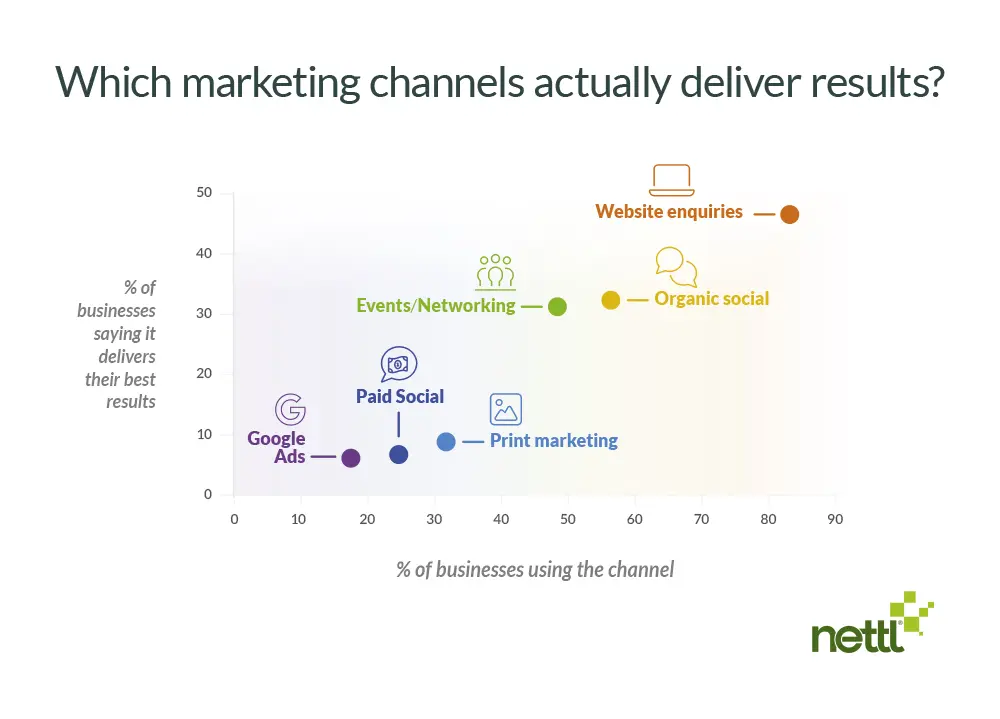
The survey revealed a noticeable gap between channels businesses use and channels they say deliver the best results.
Two channels stand out.
Paid social advertising
Print marketing
This doesn’t mean these channels don’t work. In fact, they are both one of the most cost effective and impactful forms of marketing to a local audience. Especially used together.
However, they’re often used without the pieces around them that make them effective.
For example:
When channels are connected properly, results usually improve.
Actionable Insight
These channels are not “broken,” but they are often “unplugged.” To see a return in 2026, paid social must be tightly integrated with specific landing pages, and print must include digital bridges like QR codes or unique URLs to begin to measure attribution.
NETWORKING IS STILL
A SECRET WEAPON
In an era of AI-generated content and digital noise, trust has become the ultimate currency.
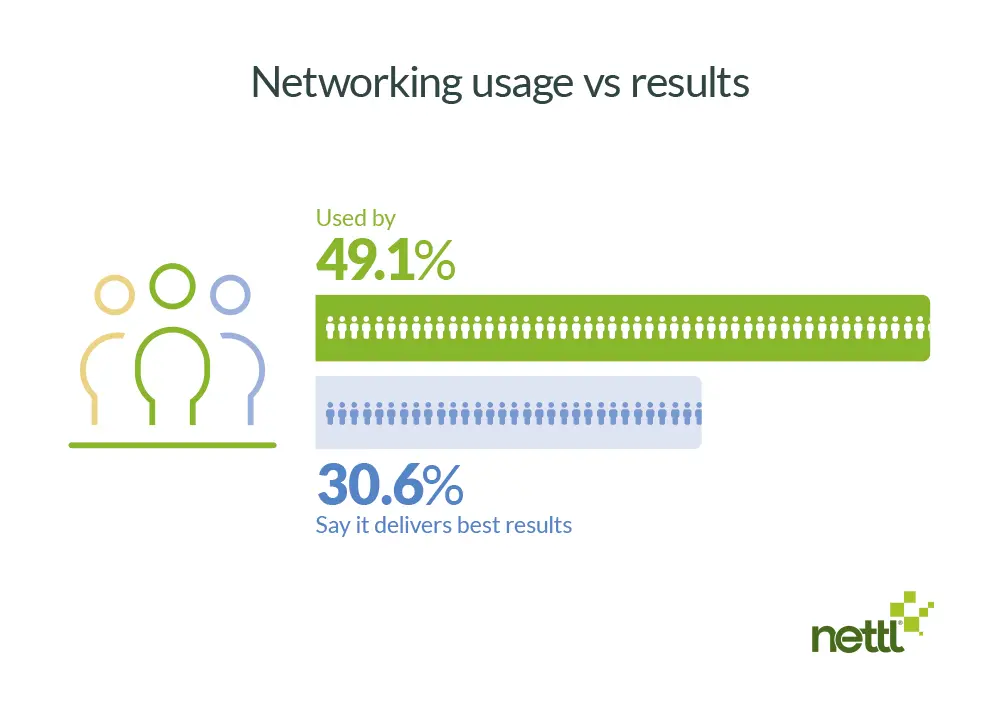
This is reflected in the high performance of networking and events. While used by 49.1% of businesses, it delivers the “best results” for 30.6%.
For UK SMEs, networking is the “Secret Weapon.” It bypasses the skepticism of digital advertising and builds immediate rapport.
However, the challenge for 2026 is scalability. You can only be in one room at a time.
The most successful businesses are those that use their digital channels to amplify their physical networking, connecting on LinkedIn after an event, or using email marketing to nurture the relationships started in person.
Actionable Insight
Treat networking as a high-conversion lead source, not just a social activity. A simple follow-up system can dramatically increase the value of every conversation.
THE CONTENT
CONSISTENCY GAP
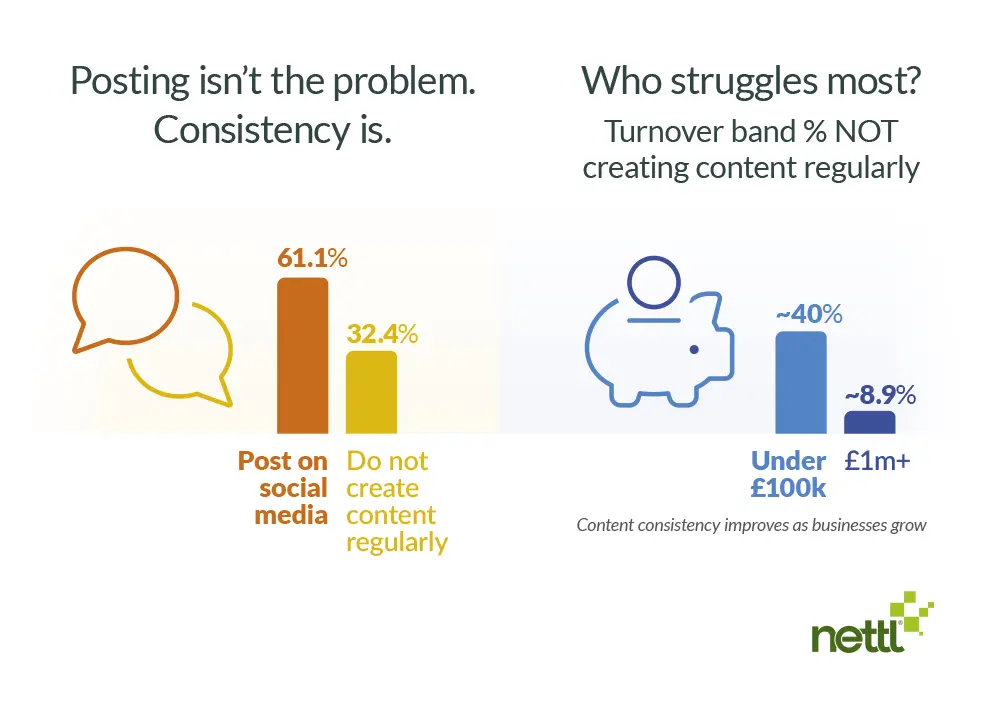
Content marketing is widely talked about, but consistency remains a challenge.
While 61% of businesses say they post on social media, 32% admit they don’t create content regularly.
That’s a big gap.
Many businesses start enthusiastically, but posting fades when work gets busy.
In reality, consistency is usually more important than creativity.
Simple repeatable formats can keep a business visible:
Marketing momentum comes from showing up regularly.
Actionable Insight
Create three simple content formats you can reuse each month. For example: a testimonial, a recent project, and a useful tip. This makes posting easier and removes the pressure to constantly create new ideas.
MARKETING MEASUREMENT
STILL NEEDS WORK
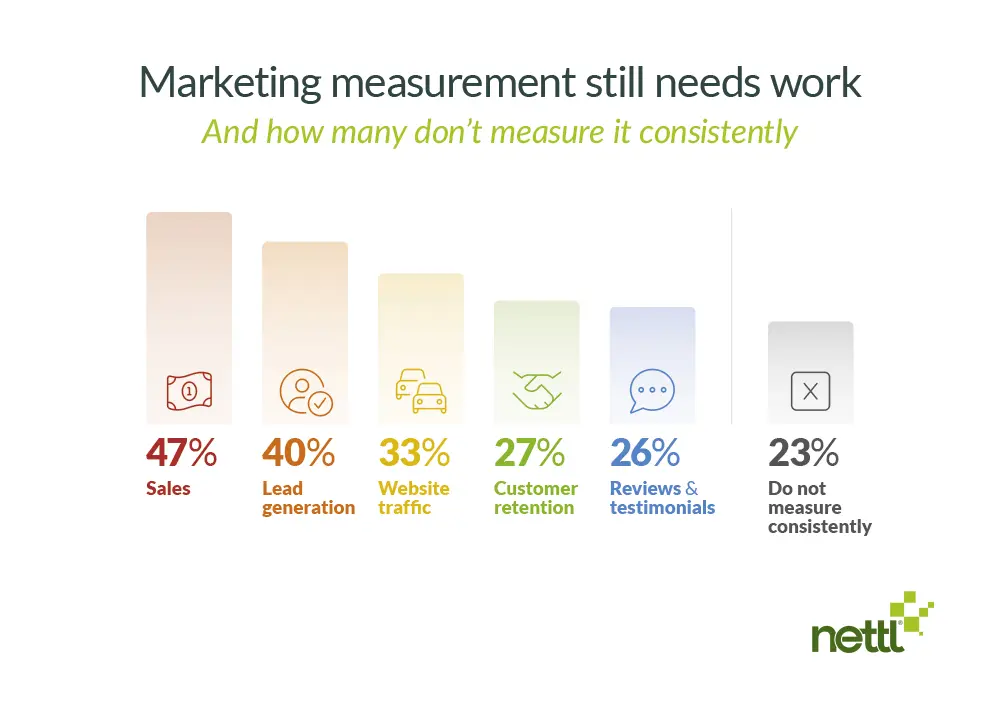
You cannot manage what you do not measure.
Yet, 22.7% of UK SMEs admit they do not measure marketing performance consistently.
Many businesses track outcomes such as:
But others are still unsure which activities actually produce results.
Even basic tracking can improve marketing decisions.
Simply asking every new customer “How did you hear about us?” can reveal valuable patterns over time.
Actionable Insight
Start small. If you don’t have a complex tracking system, simply ask every new customer:
“How did you hear about us?” and record it in a simple spreadsheet. Over time, yet quite quickly, this creates a clear picture of which marketing activities are performing best.
TIME IS THE
ULTIMATE BARRIER
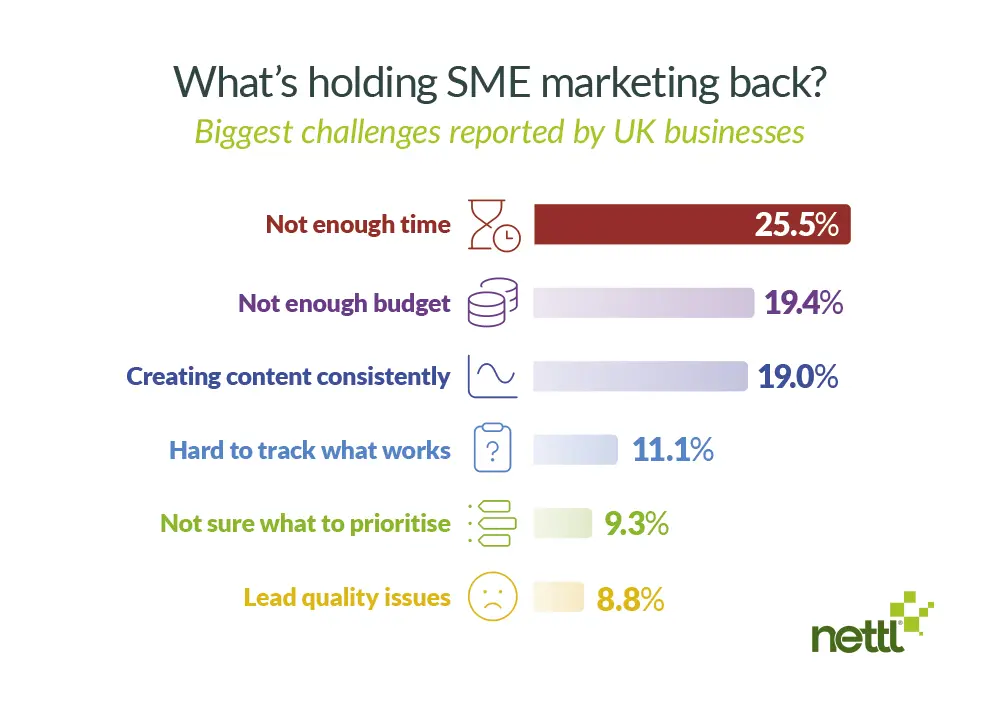
When asked about their biggest marketing challenge, the most common answer was simple.
Not enough time.
In fact, 25.5% of businesses said a lack of time is their biggest barrier to marketing success, making it the most frequently cited challenge in the survey.
For many SMEs, marketing competes with everything else that needs attention. When work gets busy, marketing activity often slows or stops entirely.
This helps explain why consistency is such a common challenge across other parts of the survey.
Actionable Insight
The issue for most businesses isn’t knowing what marketing to do. It’s finding the time to do it regularly. Systems that simplify or automate marketing activity can make a significant difference to long-term consistency.
CONCLUSION
The findings from the Nettl Business Marketing Survey highlight a simple truth.
Most SMEs don’t need more marketing tools.
They need clarity, consistency, and better use of the tools they already have.
The businesses most likely to grow in 2026 are those that focus on a few key activities and do them consistently:
Marketing success rarely comes from a single campaign.
More often, it comes from steady effort over time.
THE NEXT STEPS
How does your business compare to the UK average?
In the next 30 days, we recommend taking three steps:
Is it optimised to deliver your “best results”?
If not, why?
Pick one channel (like social media) and commit to a schedule you can actually keep.
If you don’t track leads, start today.
Nettl is here to help UK SMEs bridge the gap between big ideas and real-world results.
Visit your local Nettl studio to start your marketing audit.

 AI Talks